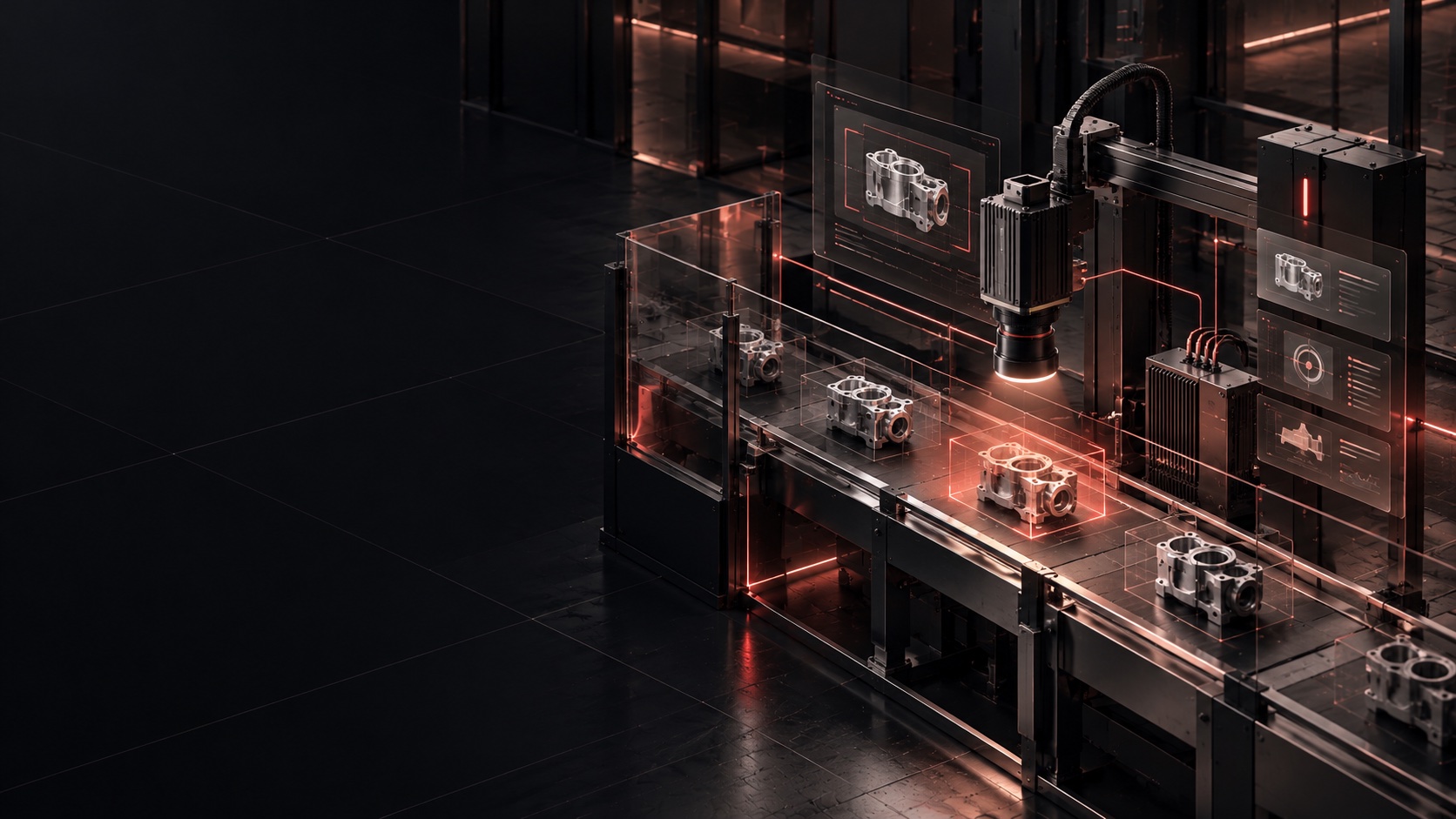

Vision algorithms and system integration for object monitoring, quality inspection and measurement. The scope of control coordination is defined by site interfaces, operating conditions and acceptance criteria.
Capabilities are organized by application goal into three layers.
Each layer is validated against on-site samples and system conditions.
Detects objects and abnormal events in defined areas, producing alarms and traceable records.
Outputs particle size distribution, temperature, dimensions or defect classes, validated against agreed samples and statistical criteria.
Provides vision results or interlock signals to automation systems. Interfaces, control scope, fail-safe exit and manual takeover are confirmed on site.
Connecting on-site capture, edge processing, algorithm management and business applications.
Module configuration, secondary development and adaptation are scoped per project.
Browse vision solutions by industry and capability layer.
Card metrics state their test conditions. Actual performance is confirmed by on-site pilots.
Imaging, lighting and protection are assessed for harsh industrial conditions.
Configuration accounts for heat, dust, steam, flicker and reflections on site.
Infrared configurations for targets such as furnace mouths and steel streams, validated against smoke, steam and viewing position.
Air and water cooling enclosures and insulation configured for the environment, verified on site.
Dedicated light sources and lighting control to suppress flicker and glare, with their effect on measurement verified.
3D cameras with lasers for point clouds; line-scan cameras with speed sensors for surface defects and dimensions.
Sample validation and model tuning by production line, operating condition and defect class.
Reviewed results are labeled and quality-checked before retraining; updates go live only after validation.
Assess conditions, camera positions and imaging; agree targets and acceptance criteria
Capture site images and build a cleaned, labeled dataset; customer-private samples supported
Train and fine-tune models; evaluate precision and recall against agreed criteria
Staged release, compared against reviewed results before wider use
Reviewed results fed back into training; false alarms reduced per scenario
Camera, lighting and edge computing combined for fixed workstations.
Multiple video streams analyzed centrally on plant servers with unified alarms.
Unified algorithm management across group sites: central training, edge deployment.
Describe the inspection target, site environment, existing equipment and expected output so we can discuss sampling, imaging and pilot scope.
Please include the following in your email, and the relevant team will get back to you.